Showing posts with label yoga. Show all posts

Monday, October 21, 2013

Freedom As The Result of Boundaries

When saying NO means saying YES
I am learning to have more boundaries.  I know, kind of late in the game to be acquiring this skill; better late than never.

Part of saying NO (thank you) is being able to weather the sting of turning someone down.  I have a wonderful, replete life filled with people I love, care about, and want to spend time with.  Some of the saying NO means I am choosing to be away from them.  This doesn't feel good, and I learn to live with the discomfort.  I am choosing to say "no" to one thing to say YES to another.  This feels selfishIt is. I am learning to be SELF-ish.


I urge others to take time for themselves, to hold themselves sacred and dear.  I truly mean these words. In fact I have self care routines that can ground and prepare me for each day.  What I have been neglecting is to play.  To take classes myself, to do something where I don't have a specific defined outcome or productive result. Many things I do have an outcome: a meal, tidiness, a newsletter, an accounting report,  a class taught or a class given, a project completed.  I was craving NOTHING; meaning nothing productive, useful, or goal specific.


I needed clay.  I had to decline some wonderful friendship opportunities this past weekend. I had to say no to some otherwise really fun stuff.   I had to do this so I could sit down at the wheel with a few pounds of mud and make something for no reason.  I made pieces that I crunched up and put back into the clay bag, I made pieces that started out as one thing and became another.  I allowed myself to be a newcomer, a neophyte, a beginner and that took the (self induced) pressure off.  And the next day I needed to follow up; trim and decorate.  First time at the wheel in over a year.  I needed to do this just for myself and not for sale, a gift or to explain or teach.

Well,  I also needed a yoga class, particularly after that first day of throwing; my body was out of whack.  And rather than DO IT MYSELF; I was determined, in the name of self care, to lay down my mat in front of another teacher and to be cared for.  It was perfect.

By creating boundaries in my life I was able to find freedom: freedom to play, freedom to create and freedom to be a human BEing - rather than a human doing.  As the result of saying no AND saying yes I am refreshed.

The courage to change: from being an active addict and codependent to being a woman in recovery.  The courage to change: from a driven woman to one who can let go of the steering wheel: I wish each and everyone one of you the strength to say NO in order to say YES.

Kyczy Hawk E-RYT200, RTY500 is the author of "Yoga and the Twelve Step Path", a leader of Y12SR classes, and the creator of SOAR(tm) (Success Over Addiction and Relapse); a teacher certification training that she holds with her good friend Kent Bond E-RYT500. Find out more about her, her classes and the training at yogarecovery.com


Friday, June 14, 2013

It's All In Your Head


JUST IN YOUR HEAD
There are some of us who heard our whole lives "it is just in your head", meaning that what ever we were feeling was an illusion or delusional thought. The implication was that we were not in reality, our responses and reactions were based on ... nothing. IN FACT we were responding (with more or less skill) to what was going on around us. Sometimes said, sometimes unsaid, but we KNEW what was going on. As a child of an alcoholic I learned well how to gauge my environment. I developed coping mechanisms solely upon the criteria of staying safe. But that phrase "it is all in your head" frightened me away from believing in my mind.

THE POOR BRAIN!
Imagine my delight when I discovered that they were right (to a degree) - but not in "that" way. Trauma of a chaotic and unsettled household and my later active addiction did, indeed, change my brain. The chemistry was certainly affected by ingested drugs and alcohol but more important is the fact that my life long experiences had changed the functioning of my brain.


THE GOOD NEWS
Just as sensory inputs had harmed the brain; wise and healing sensory inputs can restore the brain. YES! The brain can be healed.

THE QUESTION IS HOW
The tools we can use to restore us are simple. With breath, meditation and mindful awareness, as well as intentional movement - the damaged brain centers can be brought back on-line. The hemispheres can re-establish a relationship - right brain and left brain can unite. You can re-integrate the "dis"-integration of the brain, your being and your sense of self. Yoga combines these three modalities and that is why the impact is so tremendous - a brief consistent practice, over a relatively short period of time shows results. The word "results" referring to the fact that the brain heals. The trauma that turned off functioning in the brain can be repaired. Trauma exists at other levels: it is also in the body, and we can address it with the movement. The trauma is also in the self, and we can love that back to health.


THE YOGA SERVICE COUNCIL CONFERENCE
The talented, compassionate and passionate yogis who attended YSC the conference this year at Omega have been serving communities who need to heal. All forms of trauma; illness, poverty, abandonment, disease, neglect, marginalization and harm affect the populations that these yogis have decided to serve. The service means offering the tools for self care that yoga provides in an appropriate and inviting venue. Kelly McGonigal, B.K.Bose, Bessel van der Kolk (among others) gave group talks that amazed and inspired us. Sharing the results of their research freely with us, inviting us all to be part of the remedy, they explained how, what we were doing, had such a profound positive impact on the populations we served. It was a delicious affirmation of our efforts. It was grace.

Their documented research shows exactly this- that the brain, carefully and lovingly attended to, can reframe, reform and remap itself bringing integrated vitality and a wholesome life back to a once damaged being.

Remember - breath awareness, mindful meditation, and yoga. Now let the phrase "it's all in your head" be empowering and remind you, you have the solution.

Kyczy Hawk E-RYT200 is the author of "Yoga and the Twelve Step Path", a leader of Y12SR classes, and the creator of SOAR(tm) (Success Over Addiction and Relapse) a teacher certification training she holds with her good friend Kent Bond E-RYT500. Find out more about her, her classes and the training at www.yogarecovery.com

Thursday, June 13, 2013

Yoga Service Council - Many Ways to Give


June 7 to 9 2013 - a weekend of amazing grace, companionship, networking and growth. Graced to be a scholarship recipient, and humble to be among such phenomenal people. This will be a series of what I heard, what I learned, and what it meant to me and the trajectory of my mission.

I found myself taking notes constantly. I knew my mind could not hold it all: the wisdom, the knowledge, the understanding and the passion. Every presentation was meaty and full of ah ha moments, and times when I was reassured ("I do that!", "I have felt that way." and "I am inspired; I know I am going in the right direction!"). There are times when my mind exploded with the realities that were being shared. And we had opportunities to walk and talk with one another - debriefing and knitting together our community. We had moments to be alone and contemplate.


Beryl Binder Birch started us off with a "lovely" talk. Weaving together the duties of a benevolent social activist with the meaning of true compassion, she set the tone for the whole weekend.

Nikki Myers led the morning practice, exposing many to recovery infused yoga for the first time . Slow, definitive movement performed contemplatively prepared us for the day. She also presented a workshop "The Issues Live in the Tissues: Addiction Recovery, Trauma Healing and Yoga." She has phenomenal command of the information. She has touched so many with her work, and here at the conference it was no different. I am proud to have her as a friend.


The schedule from the 2013 Yoga Service Council conference will show you everything that was available. The breakout sessions, the group presentations and the panel discussion were phenomenal. There was room for questions, room for discussions and room for true dialoge - with differences of opinions thoughtfully and skillfully expressed. This was a conference of true learning and knowledge exchange.
Scientific data, both from experiencially based research as well as from brain imaging studies validated what we knew to be true. Yoga changes lives. Yoga changes your body, it changes your emotions, your energy, it can have an impact on your spiritual life AND it changes your MIND.
I tell you that to tell you this: it is all in your head. Not in the way you might think - but it is all in your head.


I will explain this in my next entry.

Kyczy Hawk E-RYT200 is the author of "Yoga and the Twelve Step Path", a leader of Y12SR classes, and the creator of SOAR(tm) (Success Over Addiction and Relapse) a teacher certification training she holds with her good friend Kent Bond E-RYT500. Find out more about her, her classes and the training at www.yogarecovery.com

Tuesday, September 11, 2012

Five Important Benefits....

I am featured in AlchemYoga. Hop on over and check it out! You can click here to read it.
I have recorded it below as well.


With the auspicious co-occurrence of Yoga Awareness and Recovery Months happening in September, it is the perfect time for me to share my five important recovery benefits from practicing yoga.
1. Getting acquainted with feelings
When I was a newcomer, first entering the room of my 12 Step program I had no idea what my feelings were. I had the basics: sadmad and glad, but even these were not in appropriate amounts or expressed in proper circumstances.My emotional wiring had shorted out. Fast forward a few years and I have developed a rainbow of feelings, of emotions, and I had become more skilled at expressing them in the right volume and the proper circumstance. And yet, I still had difficulty identifying MY own personal feelings; I still felt blocked and out of touch with myself. Enter yoga: What an amazing experience. On the mat I began first to get in touch with my physical sensations. With time I began to investigate my responses to them: how did I feel about effort? How did I feel about the challenging poses? What did my heart and my mind deal with that? Did I try extra hard, did I recoil from the pose? Did I dread trying it or feel I was in battle with it, pushing through to conquer it? I realized that how I dealt with my yoga practice was how I dealt with life. It became a window and a mirror. It helped me learn my feelings and feel the process of learning.
2. Slow Growth with Gratitude
I am not a spring chicken. I am a woman of a certain age and I am delighted with my presence on the planet at this time. Like many in the rooms of recovery – one of the outcomes of my past life could have been death or disability. I am so fortunate to be here. My age does not trouble me. When I am in a yoga class and look around at others – I see youth and flexibility and strength and all kinds of abilities I do not possess. That is judging myself by their outsides. Not so helpful. When I bring myself back to myown mat, and participate in my own practice: as I have to participate in my ownrecovery, I am able from day to day, from practice to practice see progress. Not weight loss or arm balance mastery or any pretzel pose, but composure, steadiness, stillness and ease. As in practicing the principles of the program the change comes – “sometimes swiftly and sometimes slowly”. I notice the changes and I am grateful.
3. Discipline and Commitment
It is not always easy getting to a meeting. It is not always easy getting to a yoga class. It requires commitment and dedication – to your self and your growth. I know I will feel better. I know my mind will move away from planning or perseveration when I practice my yoga. I can’t think about the grocery list when I move through my fourth slow sun salutation or balance in half moon pose for ten slow full breaths. I just can’t do it when my mind wanders. I stay there in my body, feeling my feelings, witnessing my mind, and being in my body. That is the grace of the practice and even when there is joy when coming out of final relaxation – I occasionally fight attending to my practice. I procrastinate, I make excuses, I resist. Just like going to meetings. And yet, nothing can be better than keeping that commitment. It is an estimable act – helping to build self worth.
4. Integration
One of the definitions of yoga is union: union of body mind and spirit. I am an addict/alcoholic. I have a physical allergy, spiritual malady and suffer from a mental obsession. This makes yoga a perfect remedy, a holistic remedy for this holistic disease. Through the breath and through the poses we calm the mind. In fact the mind may even soften to the point that thinking retreats into the background and one can get in to a meditative state – just experiencing the pose, the breath and one’s higher power. In meetings and in our 12 step work we move toward the eleventh and twelfth steps, creating in ourselves the capacity to both pray and meditate as well as to be right in our thoughts, actions and deeds in our daily lives. We do this so we may be of service. And through Karma yoga we also practice being of service coming from the place of our higher selves. In this way we have developed integration of body, mind and spirit and practice this both on and off the mat.
5. Trust
Now you might wonder how does yoga affect trust. I first wondered how going to meetings was going to keep me sober! I was also curious as to how working the twelve steps would improve my life. It was in shambles, I was in shambles. And yet, trusting in the process, I came to meetings, met with another alcoholic, read and worked the steps and now, many years later I no longer doubt. I trust. I am not flexible. I am stiff and I don’t have one of “those” bodies. I have a mind that whirls around and seemingly cannot stay still, how was I going to practice yoga and how was I going to relax in savasana (tranquility pose)? I trusted. I stepped onto the mat, slowly the pain in my wrists evaporated and I could do downward facing dog without my awareness of my hands and forearms distracting me from my breath. My forward fold became less stunted and strained and became more fluid and full of ease. I gave myself time to improve and learn; I trusted my body to know what was OK, what was safe and I worked within that capacity. I don’t do elaborate back bends – they are not for me. It took a few experiences with pain to affirm this, but now I know. I have trusted both my limits and my abilities. I have taken this knowledge into my experiences off the mat and realize there are some things I do with ease and well, some things I do with difficulty and well, and there are some things that I have a choice about. Self-trust is huge and it is a very worthy benefit from both the recovery and the yoga practice.
Now you might know that these five things are but a scratch on the surface of mutual benefits. What have you discovered? What has recovery provided that is helpful on the mat? And what has yoga taught you that is helpful in recovery. I would love to hear your experience strength and hope.
by Kyczy Hawk
Author: “Yoga and the Twelve Step Path” and "Life in Bite Sized Morsels"
Kyczy Hawk E-RYT200 is a yoga instructor specializing in teaching yoga to people in recovery and the creator of the SOAR(tm) (Success Over Addiction and Relapse) certification program. Find more about her and the SOAR(tm) program at www.yogarecovery.com.


AlchemYoga has a lot of interesting entries so plan to spend a few minutes and check it out!.


Sunday, September 9, 2012

Breaking the Cycles

I am honored to be a guest blogger at Breaking the Cycles. Please click here to read what I wrote. Breaking the Cycles has been sharing research, information, personal experiences and opinions on these topics such as drug addiction, alcoholism, substance abuse, dual diagnosis, underage drinking, help for families, prevention, treatment, recovery and the neuroscience of the brain disease and brain health and more since 2008. Their goal is to change, and in some cases simply start, the conversations so together we can end the stigma, misinformation and shame. They do this through presentations, workshops, consulting, blogging and media outreach. Cruise on over to their website and see what other information you can find.

Thursday, June 21, 2012

Avoiding Relapse of Every Stripe

Yes – I can relapse – not my substance addiction but my emotional sobriety. How does this happen? How “unlovely” can I BE! What can I do to prevent it?

Some event occurs. I come into it feeling vulnerable: insecure, unsure, fearful or uncared for. A conversation commences and does not go well. And I snap. I am not able to “take” it. What ever “it” isloud talk, hasty words, uncaring speech or even a disappointing outcome. This can be a conversation with a vendor, a service person or someone who is in calling to advise me about a plan. What ever the conversation is about there is something disappointing. I find myself out of balance and that leaks out all over the interchange. First I become strident, then I shut down. We conclude the discussion and I hang up.

But that isn’t the end of it. I go on to ruminate and disturb my current moments with the memories of that unpleasant conversation. These memories are enhanced by stories from the past, fertilized and nurtured by hurt and resentment. Now they have grown from fledgling discomfort to a full-grown jungle of negative emotions. Then "generosity" appears and I feel compelled to share this experience with others, over and over, letting their concern and sympathy fan the flames of my bitterness. I then move into self-righteous angera deadly intoxicant for this person in recovery – and the “slip” is complete. I have fallen off the maturity and spiritual wellness wagon. I am now on my back in the mud, wiggling around, searching for the foothold of composure and wellness. I yearn to walk upright in peace; body, mind and spirit integrated in one unified whole of compassion for self and others. And, yes, the suffering comes because I am TOO WELL to be THAT SICK anymore.

 I can be pretty unlovely, mewling in my pain and frustrated in my inability to overcome it. And the answer comes, as they often do, in the sharing of another. Don’t resist, experience. Allow the feelings to be, without the story, without justification, defense or even denial. Sit with it and let it pass. And stop “sharing the wealth” of disdain and distress. Yes, I have been taking my own poison.


And today I choose to stop. I avoid relapse of my primary addictions by sticking with my program of recovery. I avoid relapse of an uncaring attitude toward my body,mind and spirit unity by practicing all the forms of yoga. I practice keeping my spirit in good health with meditation. And, yet, I am still human and can relapse in my emotional "sobriety".  How can I avoid this? I go back to the principles of yoga and recovery.  Will that prevent them for good and all? I don't know – but I do know the periods or relapse are shorter, the anguish less severe and less perseverant, and yes, I do eventually remember to sit. Sit it through don’t sit it out.

Kyczy Hawk E-RYT200, RTY500 is the author of "Yoga and the Twelve Step Path" ans "Life in Bite Sized Morsels", a leader of Y12SR classes, and the creator of SOAR(tm) (Success Over Addiction and Relapse) a teacher certification training. 


Follow her ONLINE recovery infused yoga classes 
http://yogarecovery.studiolivetv.com/MemberRegistrationYR.aspx

Thursday, May 17, 2012

Yogasync TV - a new online offering

I have just subscribed to an online resource called YogaSync. I have been following Al and Greg's yoga classes online for several years. They are from New Zealand and with their delicious accents have been offering offering online videos for detailed yoga sequencing through Yoga Online at Yoga.org.nz. You can go to that website and download an hour long class. For Free! (until the end of May) Or you can view it on You Tube. They have now launched a new and fabulous product called YogaSynch TV. This online tool allows the user to select already created sequences at any level, for a huge number of specific target areas or challenge poses. From the image above you can see that they give a comprehensive view of the pose. You should check out the website for all the wonderful features. One can also go into their library of poses and create one's own sequence. It is very easy to do picking from the pose library, the level of effort,flexibility, and challenge that is best for you. You can then name and save it for re-use. It is fun to plan and time classes with this tool as well. As one of the founding members I was also able to contact Sarsha, one of the wonderful teachers featured in the videos, to get my own personal sequence developed and I have been loving it. They have numerous pose, meditation, and relaxation videos on you tube. Do a search for one and give them a try. Al also has some great nutritional advice and recipes to feed the inner yogi. Give it a try and tell them "Kyczy sent me"!

Thursday, May 10, 2012

It's not the falling down that makes us fail...

it's the staying there. Check out this blog, comments and videos to see tremendous dedication in spite of tremendous odds. The teacher has offered props and the student has accepted them and yoga has invited improvement. (See the You Tube video from this link here: http://youtu.be/qX9FSZJu448)


Kyczy Hawk E-RYT200, RTY500 is the author of "Yoga and the Twelve Step Path" and "Life in Bite Sized Morsels", a leader of Y12SR classes, and the creator of SOAR(tm) (Success Over Addiction and Relapse) a teacher certification training. 


Follow her ONLINE recovery infused yoga classes 
http://yogarecovery.studiolivetv.com/MemberRegistrationYR.aspx

Wednesday, May 9, 2012

Gratitude and Samskara- Habits of the Mind

I was thinking about samskara (habits of the mind) today. Recalling gratitude throughout the day is such a powerful tool in developing healthy habits of the mind.
Generosity is a two part event. The giving and the receiving. Giving anonymously is good to exercise the former. In order to complete the cycle, however, there must be some exercising in the ability to receive; to receive with grace, with enthusiasm, with authenticity. Gratitude is a way to practice this. It completes the cycle of giving. The universe, the divine, your higher power, has given to you with open arms – no thought of reciprocity except to take, use and enjoy the gift. That’s it. So gratitude is the way to say thank you.
Gratitude and engagement. Engage in the gift. The gift keeps on giving: as you practice gratitude you also create positive emotions in yourself. The brain and nervous system relax and receive. You build habits of positive thought. While you are building positive thought you are changing the habit of creating negative thought. This negative thinking; these habits of the mind, referred to in yoga by the sanskrit word "samskara", harm us and harm our world. So the gift of receiving the grace of our higher power, being grateful, creates positive habits of the mind, which in return allows us to live in positive energy which is….like a gift to the world. In receiving we are giving. Kind of a sweet connection to make.

“What you feed grows and what you starve dies.”  And by “feeding” the positive we encourage it to grow; at the same time “starving” the negative. I will feed my gratitude today and so the feelings of lack, loss and scarcity will diminish.

So don’t delay – start your gratitude list today.


Kyczy Hawk E-RYT200, RTY500 is the author of "Yoga and the Twelve Step Path" ans "Life in Bite Sized Morsels", a leader of Y12SR classes, and the creator of SOAR(tm) (Success Over Addiction and Relapse) a teacher certification training. 


Follow her ONLINE recovery infused yoga classes 
http://yogarecovery.studiolivetv.com/MemberRegistrationYR.aspx

Saturday, January 14, 2012

Ethics and My Daily Practice


HOT, MEDIUM OR COOL - How to I integrate my ethics into life and practice.


It was suggested to me that I think about how I live my ethics; is my practice "hot, medium or cool". My first internal response to this was - I am rigorous about my attention to my ethics. I am a practicing member of my recovery fellowship, AA, and I am a practicing yogi. I work the steps, and practice the principles in "all of my affairs". I have a daily spiritual practice of listening to my inner stillness and honoring the 8 limbs of Raja Yoga.


On more reflection I realized why it is called a PRACTICE (and not a perfection). Some days may approach is lukewarm if not totally "cool". I sit in stillness only to make note of all my thoughts of things to do. The stillness is merely organized inactivity in preparation for wild activity. There are days my personal yoga practice is so perfunctory as to be merely extended stretching while putting on my socks and pulling on my sweater. I may stop at a sink or wall to extend my back and experience the tightness in my hamstrings or calves, push my palm against the hallway wall and linger for thirty seconds to open my tight shoulders but that is it. It is the practice of yoga while I am on my way to doing something else. Certainly not a mindful mat practice. 

My engagement with my ethics is another part of the journey. First, what are they? I embrace the Yamas and the Niyamas (and the corollary of some of them in avoiding the 7 Deadly Sins) and they do form the basis of my ethical behavior. That includes the practices of forgiveness and compassion - so critical for me to be able to express and act in these ethical manners.

When do I fall short? I fall short when I am feeling less about myself. I fall short when I feel I need something that with my own current skill or resource level, I am unable to earn on my own. This can apply to the material; but more often now it occurs when I feel I need or want something non-material. This can be ability on the mat, this can be artistic and technical skills in the pottery studio, this can be wisdom to navigate difficult situations in life. When I am feeling badly about myself I have more opportunity to "regret the past", I have more need to control the outcomes of situations, I am unwise in my speech and attitude and am more likely to cause harm. When I am angry at myself I am much more likely to find occasion to be angry at others. This may sound simplistic - but is IS all about me! It is my "stinkin thinkin" that gets me into difficulties.

Compassion with myself begets compassion with others, Acceptance of myself as I am "leaks out" to manifest in acceptance of people, places and things as they are. And this causes a wave; a smile given is a smile returned. Listening quietly with an open heart allows the speaker to be in there moment unfettered to expectations. Employing Tapas, discipline, to acquire the skills I need to be better at what I do will remove the need to yearn for others' abilities. When it comes to things - examine why I need then, what it is I really "want" and then, work and save for it if that thing is necessary. So how am I with my ethics? Better in this moment, better when I consider them in what I think, say and do. Will I ever think I am "hot" or 80 to 100% attentive? I don't know. I am concerned that when I feel "hot" I am really "cool".

Today, however, I am going to reinvigorate my attention to this question; I will remind myself again and again (I have an over active "forget-er") to come back to the question and then, to come back to compassion.

Kyczy Hawk E-RYT200, RYT500 is the author of "Yoga and the Twelve Step Path", "LIfe in Bite Sized Morsels" and a leader of Y12SR classes. She is the creator of SOAR(tm) (Success Over Addiction and Relapse) a teacher certification training. Recovery infused yoga classes are available on Studio Live TV. Find out more about her, her classes and the training at www.yogarecovery.com

Wednesday, December 28, 2011

Growing and Changing

A new class is being formed for Yoga and Recovery - Y12Sr - starting Monday, January 9, 2011 from 7 pm to 9 pm at the Gyalwa Gyatso Buddhist Center in Campbell. I am excited and feeling a little anxious. It is the kind of anxious I feel when I have invited folks over and the table is set, the food is all but finished, the house is clean, the towels arranged just so in the "necessary". I am ready and it is only four hours until the guests arrive! Not really, but it feels like that. The preparedness and the forward looking combine to being both in the past (preparation) and the future (arrival). The present looms large with the sensation of no NOW. Really, the NOW is all there is and being really there, in the moment, in each moment without the distraction of things to do, or conversations to begin, or projects to start, is very uncomfortable. This is actually the perfect time to practice now-ness.
While I experience anticipation and excitement I will make these days about being where I am; practicing the fullness of karma yoga. I do all that I can and let go of the results. Sounds almost like the program, doesn't it! Ha - tricked again into practicing the principles in all my affairs.
Happy New Year!

Wednesday, October 26, 2011

Preparing for November Workshop

I am so delighted to be able to present my workshop on Yoga and the 12 Step Path November 13th at the Gyalwa Gyatso Buddhist Center in Campbell. I am going to focus on the Yamas and the Niyamas as well as lead a gentle yoga class. I am still contemplating and meditating on the actual content of each section and that gives me an opportunity to listen to and reflect upon the truth of these tenets in my everyday life. That is where the yoga lives in me - in the truth of my thoughts, speech and behavior in everyday life. These concepts are not just to be part of reading and discussion (although that is a starting point). These concepts come alive as I practice them - not only out and about with people I don't know, but with my family and friends, as well as in my heart and mind when conversing with myself. The addict lives strongest in my brain and the practices of yoga need to winkle themselves in there to soften my heart, calm my mind and bring the actions of self tenderness into the day. So here is to my practice and I look forward to sharing it with you. Come join me Sunday 11/13/12. More information will be forthcoming.

Monday, August 15, 2011

New friends - old souls

The Y12SR and Sunday night yoga classes have new students. I am enriched with knowledge, insights and struggles brought by each new person who comes to class.
I have had the delight of getting to know a young person who is the friend of one of my kids. An "old soul" who has wisdom and kindness, yet has experienced so much pain from the journey to wholeness. Coming back to the class week after week I get to hear the serenity being developed, the healthy solutions being sought and the tenacity that grows out of living a life in recovery one day at a time.
I have met people further along their path of recovery who want or need to expand their tools of coping and soothing. Yoga coupled with the tools of recovery do fit that bill: yoga philosophy giving an additional framework in which to discuss our recovery ethics and what it true to us. Yoga movement helping to release the tensions that have built over time. Pain in the spirit, the body, and the mind can be lovingly addressed and let go.
I have met people who are not sure what the problem is: self or another, personal behavior or the "unacceptable" behavior of a loved one. Sitting in the discussion circle, hearing what is read and said, can help unravel the confusion. Taking it to the mat can assist working things out; as the body moves through the poses - the subconscious mind can move through what has been said. Sivasana can then integrate the activity of the body and the enlightenment of the mind.
So new folks are arriving each week; some stay , some drift in and out, but I am always left with the honor of having been in their presence. I am grateful.

Tuesday, May 31, 2011

Summer Cold and Taking Things as They Are

I have been madly preparing for an art show and sale that takes place on the 18th of June. With pottery you have to get all revved up weeks before the event so that the 3 to 6 week process from bringing pieces from the clay bag to the table can be completed. This is planning and living in the future. That vibrant activity has come to a close. I have also been writing a book (yes! A REAL book.) The process of writing and re-writing, re-reading and re-assessing is now on hold. The book is now off my desk and in the hands of the editor who has been giving me kind encouragement and wise feedback.
What does this have to do with my cold? I have cleared my desk and my potters wheel of projects - I have only a few things to do before the sale, and I cannot do them I am so exhausted! I don't' have a "next step" to do on the book - it is out of my hands for a while. I can't take the yoga classes I finally have time for; in fact I have had to cancel some classes I teach. I have to take the advice I so freely give others; to take care of one's self (yes, I mean that, the self that is in the care taking of one). So I am in a chair, not DOING anything, (except now, writing this to clear my head). I am struggling with pranayama due to my congestion and taking meditation as I can find it.
Yes, taking things as they are, not being too disappointed at the change from expectations concerning my "free" time. Perhaps this is just what I should be doing. Resting and contemplating; and coming in touch again with my activity oriented sense of self. I am still my Self - at rest and taking care. Will I listen? I am trying!

Tuesday, December 21, 2010

Chair Yoga at BREATHE in Los Gatos

A scrumptious new studio is opening up in Los Gatos. BREATHE is a feast for the eyes and the talented staff offers a buffet for the body - all types, practices and lineages of yoga are there from which to choose. Yours truly will be joining the staff in February - teaching a chair yoga class each Thursday afternoon. This one hour class will combine all the integral elements of a yoga practice; breath work, stretching, strengthening, twists and some challenge followed by full-body seated pose relaxation. I will have a "sample" benefit class on January 1, 2011 at 3pm - so please come by, see the studio and try a Chair Yoga experience. Once you try it might be able to recommend a friend and loved one to the class in February. See you there!

Sunday, August 29, 2010

Ask Kyczy about Yoga and Recovery; Samskara - negative habits of the mind

Moving out of negative ways of thinking is so important for an addict. It is a challenge for all humans, but we addicts have the additional concern of jumping into the rut of negative thinking and sliding right into addictive behavior. Thought patterns or habits of the mind – referred to as samskaras – become more entrenched the more we follow them. These patterns emanate from impressions of the subconscious mind reinforced by later decisions we had made as the result of upbringing, social adaptation, responses to negative experiences and plain wrong thinking. Later we increase the grooves of unskilled thinking as the result of actions and habits we ourselves had taken up to "take care" of ourselves or to get high. For example the self protective behavior we might have had in childhood of withdrawing from social interaction to avoid toxic actions in a household filled with verbal or physical violence, may lead to an attraction for an reclusive addiction like on line gaming, or alcoholism. That activity reinforces this samskara of isolation and withdrawal. Addiction can increase the samskara to constant feelings of being “apart from” or “alienated”. These patterns still exist in sobriety /abstinence and, without remedy, can further hamper wise and healthy personal relations. What can you do to overcome this habitual rut of negative samskara?
You can overcome this pattern by building new habits of the mind, healthy ways of looking at things, and healthy activities. In the example of isolation and alienation in the example above, the samskaras can be remedied by finding meetings of recovery that reinforce pursuing solutions, working with others and being “a part of”; the healthy satsang of WE (a group of like minded recovery oriented, spiritual people). They can help by example, demonstrating their abilities in overcoming isolation and alienation. Yoga classes that stress the positive, the being in the moment, the paying attention to the internal landscape and the breath, can also help develop positive habits of the mind. The philosophy of yoga, along with the practice of the recovery principles, can lead to uncovering the source of these samskaras and help to overcome and replace them with positive habits of the mind. A lifelong practice – but well worth it.

Thursday, August 26, 2010

Aparigraha - Non-attachment

Aparigraha - Letting Go
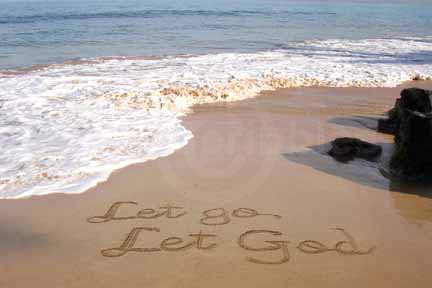
You have heard it in the rooms of recovery; “Let Go and Let God”. Holding on to the result of actions, feelings, events; trying to control outcomes or to predict the unfolding of events all cause suffering. These attributes of clinging, gripping, even greed can remove one from the moment and catapult one into a dissatisfying future. Yoga advises adopting the restraint of Aparigraha – or non attachment.
Do what is mine to do and let go of the result,  relinquish the clinging to an expectation, a considered outcome; what is usually "my way".
Developing Trust, and Being Trustworthy

On the other side of the coin is the fear that by NOT holding on, that I am uncaring or acting in a non-caring way. Somehow attachment and gripping had come tomean “connection” or even “love”. I didn't know that I could love or could care without being possessive.  I was possessive and attached to the out come, to the manner or its performance, or the event. When I let compassion and care, gratitude and trust be in my heart, when I do find union with and reliance on my higher power there is no need to grasp or hold. Life events, like a breeze or a gentle wave, move in and out a proper rate and duration. I need do nothing but breathe.

Kyczy Hawk E-RTY 500 is the author of "Yoga and the Twelve Step Path", a leader of Y12SR classes, and the creator of SOAR(tm) (Success Over Addiction and Relapse) a teacher certification training. Join her on www.intherooms.com  Sunday mornings at 7am PST at the Yoga Recovery meeting. Find out more about her, her classes and the training at www.yogarecovery.com

Thursday, August 19, 2010

Ask Kyczy about Yoga and Recovery; Brahmacharya - Non-excess

Yogic Yama - Restraint
Brahmacharya used to be translated as celibacy but now is more accurately defined as non-excess as it refers to all facets and characteristics of our being. It refers to all our passions and our desires. It can refer to time spent, money spent, and energy spent: to excess.  It can refer also to the velcro attitude in relationships and all the ways we can over do things.


The disease of MORE
Doing; doing doing doing – we are always doing something. The more we have to do the “better” we are. The more impossible our schedules the more valuable we are in this over indulging society. Free time is not only a fantasy for most – we don’t know what NOT to do with it when we have it.


Wall off the spirit; find the door
Another danger of excess it that overindulgence can be a mask, a thick goo of someTHING that covers a true need and blocks the spirit.  Food, things, sex, time; we find a way to over use and justify our excesses. Then to top it all off – I am an ADDICT! As an addict (and in my less than healthy state) there is NEVER such as thing as too much – so non-excess doesn’t make sense to me. Then there is my recovering self; that self that does not want ever to return to the madness of “too much of a good thing is a good thing” where good is relative.

With that desire for recovery Brahmacharya become one of my restraints.  So I keep Brahmacharya in mind when I work with my recovery and work with my yoga practice and when I work with my life.
With the help of others and with a sponsor / mentor the core of the issue can be revealed and resolved. This is the core of step work and the core of yoga practice.
Finding the point of enough, the grace of sufficiency, the divine in needing what I have and having what I need – that is my practice. That is my struggle and it is my reward.

Kyczy Hawk E-RYT200, RTY500 is the author of "Yoga and the Twelve Step Path", a leader of Y12SR classes, and the creator of SOAR(tm) (Success Over Addiction and Relapse) a teacher certification training that she holds with her good friend Kent Bond E-RYT500. Find out more about her, her classes and the training at www.yogarecovery.comhttp://www.yogarecovery.com

Friday, August 13, 2010

The Yamas – weaving yoga and the 12 Steps

The first of the Raja Yoga 8 limbs are the Yamas.  The Yamas are “restraints”  - five actions that, when avoided, will bring you closer to your true self. 

The five Yamas are: non violence, non-lying, non- stealing,  non- excess and non-possessiveness. Like the 12 Steps of recovery,  the restraints, along with other rungs on the yoga path, can become part of the principles you practice every day to improve your relations with yourself and with others.  The  Yamas are practiced in thought, word and deed – so there are subtle aspects that can be investigated  when incorporating them into your life.

The first Yama, “Non-Violence” sounds pretty straight forward.  As an addict (alcohol, gambling, consuming, or other) stepping away from the "object of our [over-]affection" is non-violence to ourselves and others. In abstinence we are practicing non violence.  We "cease fighting everyone and everything". We cease harming ourselves, the ones we love, our pocket book, our sanity, our safety, nor our health through the use of or attachment to our form of addiction. However we may still have character defects that are still causing harm.


Next, using the steps, we can find more subtle characteristics in ourselves that had become harmful – anger, distrust, impatience, perfectionism, resentment or being judgmental.   These aspects of ourselves can influence unwise or harmful speech even if there is no actual harmful physical action.  It is part of our journey to uncover and identify these harmful character traits.  They influence our actions and our words. Mentors and our higher power / universal spirit and the strength of looking at ourselves honestly can unearth how we un-intentionally harm others with these traits. Mentors and our higher power / universal spirit can help us move through them to the other side.

Then comes thoughtthe privacy of our own minds that can  torture us and tear down semblances of self esteem that we might have developed in our past.  One of the addict’s most prevalent character traits, a lack of esteem, is a form of self punishment and harm that has no purpose in a recovering life. So even in our thoughts we must learn to be kind,  to think, as well as act, with forbearance and compassion. 

This non harming can have a foundation in language – the words we use when mentally referring to ourselves.  When making a mistake no longer can we refer to ourselves as “stupid” or a “total *–up”.  Phrases like “good  try” or “better luck next time” would be far more helpful.  We may still have little kid brains – treat yourself as you would a favorite niece or nephew, as beloved child  - with words of encouragement and kindness. 

Why not?  If nothing else it could amuse you.  And there would be no harm done.

So – for today – try non-harming. In thought, word and deed, work on your character in this loving way.  Just  for today.

Kyczy Hawk E-RYT200, RTY500 is the author of "Yoga and the Twelve Step Path", and "Life in Bite Sized Morsels".  She is a leader of Y12SR classes, and the creator of SOAR(tm) (Success Over Addiction and Relapse) a teacher certification training. 

Follow her ONLINE recovery infused yoga classes 
http://yogarecovery.studiolivetv.com/MemberRegistrationYR.aspx

Thursday, August 12, 2010

Ask Kyczy about Yoga and Recovery; People in Recovery Benefit from Yoga


Ok – you have stopped indulging in your addiction. Now what?  You go to meetings, are meeting with a sponsor and working the steps. How do you find out who this NEW YOU is?  How do you get to know yourself?  How do you get physically well and stay well?  One of the paths to knowing your self and to getting and maintaining health is through yoga.  Yoga and her sister science Ayruveda (a complimentary and alternative medical system for keeping the body in balance)  . Today I will begin to address the benefits of yoga.  Later I will draw attention to the similarities between Yoga and the 12 Step programs.  I will also being to introduce some of the Ayurvedic concepts that can be incorporated with yoga and your recovery program to bring about total constitutional health.

The word yoga means “yoke”. It signifies the pulling together of the body, mind and spirit.  Just what we need to find our selves – to gather ourselves together in one moment – for the moment.  Yoga starts and ends with the breath – the breath is an amazing link between the body and the mind, and breath control can ease physical stress and relax the mind.  Control of the breath leads to control of the mind – and through that control we can better master our actions and responses.  A useful yoga class will teach a variety of breath practices over time.  You will be able to practice and become skilled at them – and they will lead to a rich 11th step meditation practice.  Finally yoga classes teach you how to relax.  The majority of classes will end with final relaxation in the conventional savansana (corpse) pose.  In this pose all the physical activity will be integrated into your body and your mind will savor the relaxation that results from being in your body and in the moment.


There are many paths of yoga and many traditions of yoga practice.  The yoga that is most commonly known is hatha yoga – the physical asana, or practice of postures.  Practicing yoga is a wonderful way to step into the body.  A good yoga studio will have lots of offerings so that you will be able to find a yoga style that works for you.  Some yoga styles are therapeutic yoga, integral yoga, ashtanga yoga, Iyengar yoga, Bikhram hot room yoga, Shadow yoga, restorative yoga, Yin and Vini yogas and on and on.  What kind of yoga you choose is sort of reflective of where you are spiritually and athletically.  Some yoga classes emphasize the spiritual; others the physical.  


Just like meetings – you may need to “shop around” and find the class and style, and even teacher, who suits you and your needs.  Just like meetings, sometimes you have to return a few times in order to really find out what the meeting / class is like.  Just like meetings you have to participate in the class to make it worthwhile – the more you put in to it the more you get out of it.


So – give yourself a treat and try a class.  Move into your body and find ways to move into your self.

To find out more visit http://www.yogarecovery.com